Organic mattresses · Materials and buying guides
Inside an Organic Hybrid Mattress: How to Assess Its Layers
A mattress is less a single object than a small landscape of materials, each with a different job. In an organic hybrid, springs, latex, wool and cotton may work together to shape support, cushioning and airflow. Looking beneath broad labels reveals what the bed is actually made of—and whether its construction suits your body, bed base and priorities.
A practical guide for UK readers comparing mattress materials, construction and certification claims.
A mattress is a layered system
The word hybrid suggests a joining of unlike things. In mattress design, it generally describes a construction that combines a spring support core with one or more comfort materials above it. Those materials might include natural latex, wool, cotton, or other fibres and foams. The precise meaning can vary from one maker to another, so the label is best treated as a starting point, not a complete specification.
Think of the mattress as a cross-section of a landscape. At its centre, a supporting core bears most of the load. Above it, comfort layers soften the first contact and help distribute pressure. Around these components, a cover contains the structure and provides the surface you touch. The character of the whole bed depends not only on which materials appear in the description, but also on their thickness, density, arrangement and interaction.
That is why two mattresses described as organic hybrids can feel quite different. One may use a substantial spring unit with a thin layer of latex; another may have a thick, yielding comfort layer over a different coil design. A quilted wool surface may create a gently cushioned feel, while a firmer latex layer can respond more distinctly to movement. Material names alone cannot tell you how a mattress will behave.
For UK shoppers, careful layer-by-layer reading can help separate useful detail from general environmental language. It can also make comparisons more meaningful: rather than asking only whether a mattress is “natural” or “organic,” ask what each layer contains, what it is intended to do, and what evidence supports the claims.
Start at the centre: the support core
In many hybrids, the central support system is a network of metal springs. Individual pocket springs are housed in fabric pockets and can respond with some independence from their neighbours. Other designs use interconnected spring systems. The number of springs may be reported, but that figure alone does not establish comfort or quality: spring gauge, shape, arrangement, zoning, edge construction and the mattress’s other layers all matter.
Some designs combine latex with coils, making the materials’ different responses part of the experience. Springs can provide a buoyant, responsive foundation; latex above them may add contouring without simply reproducing the feel of a conventional foam layer. But a specification needs to state where the latex sits, how thick it is and whether it is natural, synthetic or a blend. “Latex” is a material family, not by itself a guarantee of organic origin.
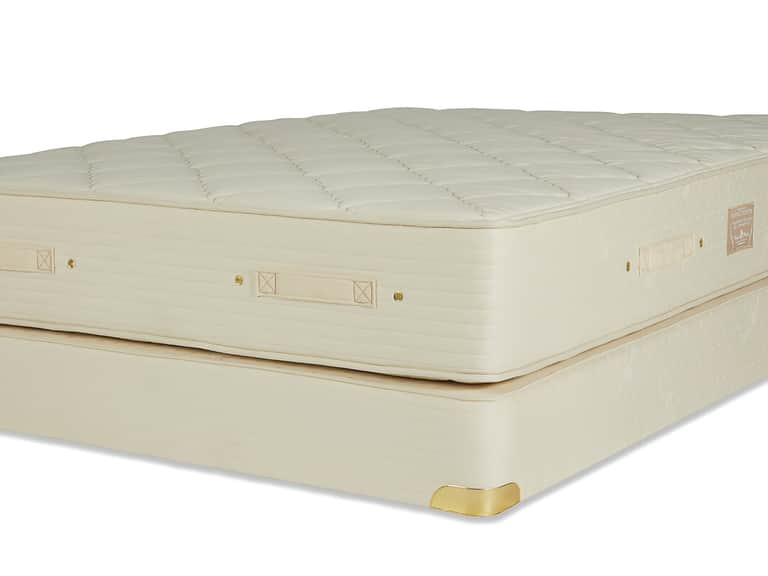
A useful example of this kind of construction is the Latex & Comfort Coil Mattress, described as combining organic Dunlop latex with a comfort-coil core, organic cotton and Eco-Wool. Its listed description is a helpful illustration of the questions to ask about a hybrid: how the latex and coils are arranged, what each component contributes, and which claims apply to which materials. The information presented here is descriptive, not an independent assessment or endorsement; check the current specification and documentation before relying on any detail.
Whether a core is made of springs or latex, ask how it is intended to be supported. A component’s performance can depend on the base beneath it, and the maker’s instructions should be consulted before purchase. In particular, check whether the mattress is designed for a slatted base, a solid platform, a divan or an adjustable frame.
Comfort layers: the materials between you and the core
Comfort layers sit above the support system and influence how quickly or gradually the mattress yields under pressure. Their composition and thickness help determine whether a bed feels firm, soft, springy or deeply cushioned. A single material may behave differently depending on its density, how it is processed and how it is paired with other layers.
Latex: responsive, with important distinctions
Latex is valued in some mattress designs for its spring-like response and ability to compress under load. Dunlop and Talalay refer to different manufacturing processes, which can produce materials with different characteristics. Neither process name, on its own, tells you whether the latex is certified organic or how much of the finished layer is natural rubber. Ask for a clear breakdown, including any synthetic content and the exact certification scope.
Thickness matters too. A thin latex layer over coils will not necessarily feel like a mattress with a deep latex comfort section. The firmness of the latex and the layering on either side also affect the result. If available, look for technical details such as layer thickness and firmness ratings, while remembering that ratings and feel descriptions are not always directly comparable between manufacturers.
Wool: a natural fibre in the quilt and comfort build
Wool may appear in a mattress as batting beneath the cover, as part of a comfort layer, or as a component used in a fire-safety strategy. It can absorb moisture vapour and help moderate the feel of the sleep surface, but the amount used and its position matter. Wool may compress over time; ask whether it is pre-compressed, how it is secured and what care the maker recommends.
Descriptions such as “chemical-free wool” need context. They may communicate a particular production or processing claim, but they do not replace a precise materials list or independent verification. If wool is important to your decision, check its source, processing information, certification and whether the certificate covers the wool itself, the finished mattress, or a specific production stage.
Cotton and other fibres: cover, quilting and structure
Cotton often forms the outer fabric or a quilted layer. It may also be used as batting or in a foundation. A soft, breathable-feeling cover is not necessarily organic: the term refers to how a fibre is grown and processed under a defined standard, not simply how it feels. Product information should distinguish the cover from the inner filling and state whether each is certified.
Some mattresses use plant-based fibres or other materials alongside cotton and wool. These may serve as cushioning, a stabilising layer or part of the overall fire-safety approach. Look for exact names and quantities where available. A phrase such as “natural materials” can leave important questions unanswered if the components are not itemised.
Why proportions and placement change the feel
Layers are not merely a list of ingredients. Their proportions determine how one material gives way to another. A thick, soft upper layer may create a more enveloping surface, while a thinner comfort layer can let the support core’s response come through more clearly. A firmer layer beneath a softer one can change how far the sleeper settles, and the cover’s quilting can add a small amount of cushioning of its own.
These interactions help explain why “medium,” “firm” and “plush” are imperfect shorthand. Perceived firmness can vary with body shape, weight, sleeping position, temperature and the bed base. A mattress that feels supportive to one person may feel too firm or too yielding to another. If possible, use a trial period or in-person test, and read the conditions carefully: return windows, collection fees, hygiene requirements and any exchange rules can differ.
Consider your sleeping position as a practical guide rather than a rigid formula. Side sleepers often pay close attention to cushioning around shoulders and hips; back sleepers may prioritise an even, comfortable sense of support; stomach sleepers may want to avoid excessive sinking through the middle. These are starting points, not medical prescriptions. Individual needs vary, and persistent pain or sleep problems should be discussed with an appropriate health professional.
Read certifications as carefully as the materials list
Certification can help verify claims, but a logo is meaningful only when you know what it covers. Some standards concern the organic status of fibres and the processing chain; others assess chemical residues in a finished product or particular components. They are not interchangeable, and none automatically certifies every material in a mattress.
For example, GOTS is a textile-processing standard that can apply to organic fibres and products within its defined scope. GOLS relates to organic latex products and their supply chain. OEKO-TEX Standard 100 tests for specified harmful substances in the certified article or component. The standards have different purposes, so a mattress carrying a certificate for its cotton cover should not be assumed to have certified latex, wool, adhesives or every other part.
When evaluating an organic mattress in the UK, ask for the certificate name, certificate holder, scope, product reference and validity. Check whether a certificate belongs to the manufacturer, a supplier, a fabric or the complete finished item. If a seller uses a certification claim, the supporting documentation should make its boundaries understandable. A certificate is evidence about defined criteria; it is not a promise that a product is entirely free of every substance or risk.
Words such as “natural,” “eco,” “green” and “non-toxic” can be used broadly in marketing. Treat them as invitations to ask for specifics. What is the material? What percentage is present? Is it certified, and by whom? Does the claim refer to the raw fibre, the finished layer or the whole mattress? Clear answers are more useful than a cluster of reassuring adjectives.
Breathability, temperature and everyday care
Airflow through a mattress depends on more than a single “breathable” layer. Open spring structures may allow air to move within the core, while wool and cotton can influence how moisture is managed at the surface. Dense coverings, thick quilting and waterproof protectors can alter the overall feel and heat retention. The bedroom climate, bedding choices and personal comfort also play a part.
For a fair comparison, examine the complete build: core, comfort layers, quilting, cover and any protective treatment. Ask how the mattress should be aired, cleaned and turned. Some designs are one-sided and should not be flipped; others are built for rotation or flipping. Wool and latex may have specific spot-cleaning instructions, and a mattress should not be machine-washed unless the maker explicitly says so.
A separate mattress protector can guard against ordinary spills and dirt, but its fabric and construction may change the surface feel. Organic cotton protectors, for example, are distinct accessories—not evidence that the mattress beneath them is organic. Choose a protector compatible with the mattress’s care requirements and avoid assuming that every “water-resistant” layer is made from the same material.
Check the bed base before you decide
The surface beneath a mattress is part of the sleep system. Slatted frames, platform bases, sprung foundations and adjustable beds support a mattress in different ways. Gaps between slats, frame strength and the manufacturer’s requirements can affect support and may influence warranty coverage. A mattress described as compatible with one base should not automatically be assumed suitable for another.
In a UK home, also consider access. Measure the bedroom, stairways, landings and doorways, then check whether the mattress arrives rolled, compressed or full-size. Confirm its finished dimensions against the bed frame rather than relying only on a size label; naming conventions and actual measurements can vary between products. For adjustable frames, verify that the mattress is specifically approved for bending and ask whether doing so affects the warranty.
Weight and handling matter after delivery. A mattress with natural fibres and a spring unit can be heavy, especially in larger sizes. Find out whether two people are needed to rotate it and whether handles are for positioning only rather than lifting. Care advice should be realistic for the household and the room in which the bed will be used.
A practical comparison checklist
When two organic hybrid mattresses seem similar, compare them using the same questions. The answers may reveal meaningful differences hidden by a shared label.
- What is each layer made of? Look for a component-by-component materials list, not only a headline description.
- How thick is each layer? Compare the depth and placement of latex, wool, cotton, springs and any other materials.
- What is the support core? Identify spring type or core construction and ask how it is intended to perform.
- What does “organic” refer to? Establish whether it applies to one fibre, several components or the complete product.
- Which certifications apply? Check the scheme, scope, product reference and current documentation.
- Is the mattress suited to your base? Confirm compatibility with the frame, slats or adjustable bed you already own.
- How does it feel in practice? Consider sleeping position, preferred firmness, trial terms and return conditions.
- What is the care routine? Check whether it should be rotated, flipped, aired or spot-cleaned.
- What happens at the end of its life? Ask about repair, component separation, recycling or local disposal options.
A clear answer is not always a simple one. Some makers may not publish every layer’s exact thickness or composition. Where information is unavailable, ask directly and decide whether the remaining uncertainty is acceptable to you. Transparency itself is a useful point of comparison.
Beyond purchase: durability and environmental claims
Choosing materials with a lower-impact aim does not end the environmental conversation. A mattress has a supply chain, a manufacturing process, a useful life and an eventual destination. Natural or certified fibres may be important to a buyer, yet durability, repairability and disposal also affect the larger picture. A long-lasting mattress that suits its owner can reduce the frequency of replacement, though longevity depends on construction, use, care and fit.
Ask whether covers or layers can be repaired, whether the mattress can be separated into material streams, and what collection services are available in your area. Local authority arrangements and recycling options differ across the UK, so check current guidance rather than assuming a particular mattress will be accepted. Packaging and delivery methods may also be worth comparing, but they should be considered alongside the product itself.
Environmental claims are strongest when they are specific and verifiable. A named fibre, a defined certificate and a clear explanation of what is included help readers make a grounded comparison. Broad claims without supporting detail offer less practical value, however appealing their language may sound.
The useful question is not simply “Is it organic?”
Organic hybrid mattresses bring together materials and engineering in a single layered object. Their character emerges from the relationships among those parts: springs beneath latex, wool within the quilting, cotton against the skin, and a base beneath the whole structure. A label can point toward a set of priorities, but the layer map shows how those priorities have been put into practice.
For UK consumers, the most reliable approach is to read the construction from the outside in. Identify the materials, examine their proportions, verify what certifications cover, and check that the design fits both your body and your bed setup. Then weigh comfort, care, lifespan and end-of-life considerations alongside organic status.
The result is a more informed comparison—and a better chance of choosing a mattress for what it actually contains and how it is built, rather than for what a single word seems to promise.
Frequently asked questions
What makes a mattress a hybrid?
A hybrid generally combines a spring-based support core with comfort materials such as latex, fibres or foam. Definitions differ, so review the actual construction rather than relying on the word alone.
Does “organic mattress” mean every component is organic?
Not necessarily. A claim may apply to a particular fibre or component rather than the whole mattress. Check the product’s material breakdown and the scope of any certification.
Are GOTS, GOLS and OEKO-TEX the same kind of certification?
No. They address different criteria and may apply to different materials or stages of production. Confirm which specific component or product is covered by each certificate.
Can an organic hybrid mattress go on any bed base?
No. Compatibility depends on the mattress construction and the base. Follow the manufacturer’s guidance on slat spacing, platform support and adjustable frames, and check warranty conditions.
Is a mattress with natural materials automatically better for sleep?
No single material or label guarantees a particular sleep outcome. Comfort and support are personal, and the full construction, fit and care all matter. This article is general information, not medical advice.